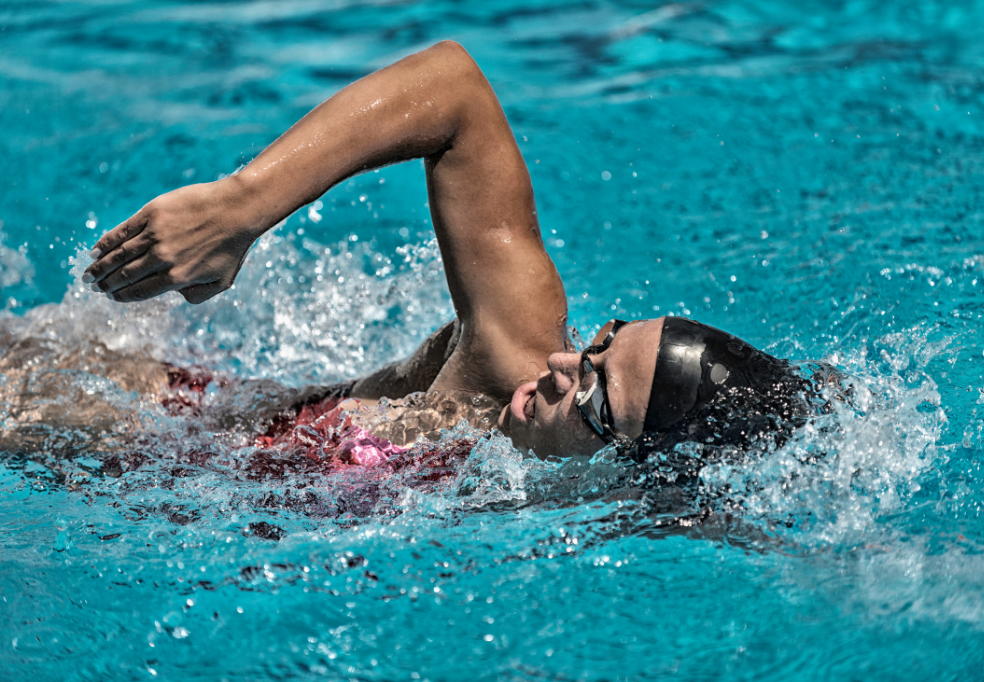
Swimming is one of the oldest human activities, with evidence of swimming dating back to prehistoric times. The earliest known references to swimming are found in ancient civilizations such as Egypt, Greece, and Rome. The famous Cave of Swimmers in Libya, estimated to be around 10,000 years old, depicts humans swimming.
In ancient Greece, swimming was highly valued and seen as an essential skill. Swimming competitions became part of the Olympic Games in 1896. Modern competitive swimming started to take shape in the late 19th century, with organized competitions emerging in Australia, Britain, and the United States.
The International Swimming Federation (FINA) was established in 1908 to govern international swimming competitions and ensure standardized rules worldwide.
Notable Success Stories in Swimming
Mark Spitz
An American swimmer who won seven gold medals at the 1972 Munich Olympics. Spitz set world records in all seven events, becoming a legendary figure in the sport.
Michael Phelps
Widely considered the greatest swimmer of all time, Michael Phelps has earned 28 Olympic medals, including 23 gold, making him the most decorated Olympian in history. His eight gold medals at the 2008 Beijing Olympics set a record for the most golds in a single Games.
Katie Ledecky
An American distance swimmer who has dominated women’s distance events, winning multiple World Championship and Olympic gold medals. She holds world records in the 400m, 800m, and 1500m freestyle events.
Ian Thorpe
Known as “Thorpedo,” the Australian swimmer won five Olympic gold medals and held world records in the 200m and 400m freestyle events, leaving a lasting impact on the sport.
Dara Torres
An American swimmer who competed in five Olympic Games and won 12 Olympic medals (4 gold, 4 silver, 4 bronze). She became the first American female swimmer to participate in five Olympics, showcasing both longevity and excellence.
Rules of Swimming
Swimming competitions are regulated by FINA’s standardized rules to ensure fair competition.
Events
Swimming events are categorized by strokes: freestyle, backstroke, breaststroke, butterfly, and individual medley (IM). Each stroke has specific technical requirements that must be followed.
Starts
Swimmers begin each race from the starting blocks or in the water, responding to a signal such as a gunshot or beep.
Turns
Proper turning techniques must be executed at the end of each length. Freestyle and backstroke allow open turns, while breaststroke and butterfly require specific turns, such as the two-hand touch in breaststroke.
Finishes
Swimmers must touch the wall or finish pad to complete the race. The first swimmer to touch wins in individual events.
Disqualifications
False starts, incorrect strokes, or failing to touch during turns or finishes can lead to disqualification.
Relay Teams
In relay events, swimmers cannot enter the water until their teammate touches the wall. Each swimmer must complete the correct stroke for their segment.
Stay Updated on Swimming
To stay informed about news, results, and major events in the swimming world, you can visit the following websites:
- FINA: fina.org – Official international governing body for swimming, providing event schedules, rules, and news.
- Swimming World Magazine: swimmingworldmagazine.com – A reputable source for articles, competition coverage, and swimmer profiles.
- SwimSwam: swimswam.com – Comprehensive coverage of global swimming events, training insights, and athlete interviews.
- The Independent – Swimming: independent.co.uk/topic/swimming – Covers major competitions and athlete stories.
- Olympics.com – Swimming: olympics.com/en/sports/swimming – Official Olympic site for news and results.
- NBC Sports – Swimming: nbcsports.com/olympics/swimming – Features swimming coverage, interviews, and highlights.
Explore More About Sports and Our Services
If you found this article informative, explore our other sports-related content and learn more about the services we provide. Visit our homepage, discover more about us, or contact us for further information.
